Small Trial Links Daily Strawberries to Reduced Menstrual Pain
09/26/2026 / By Coco Somers
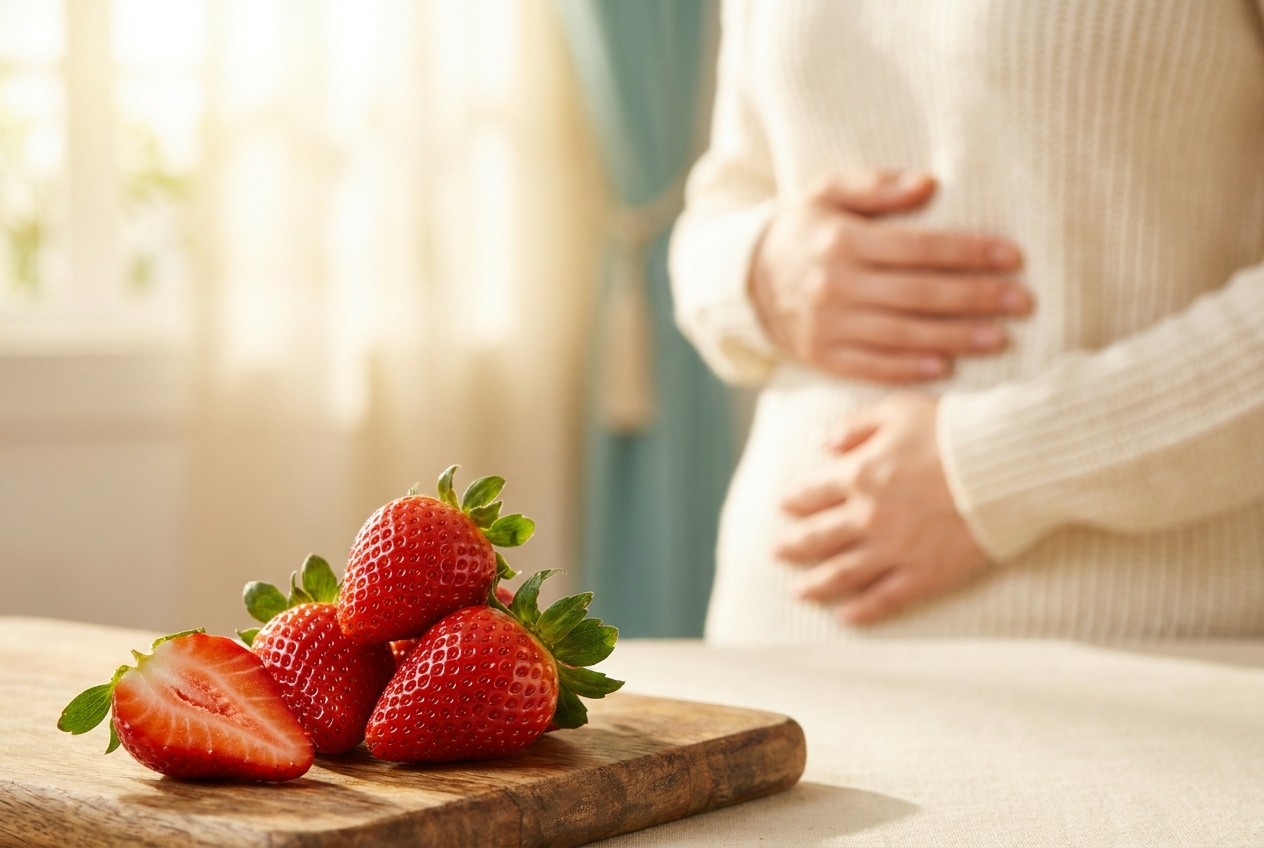
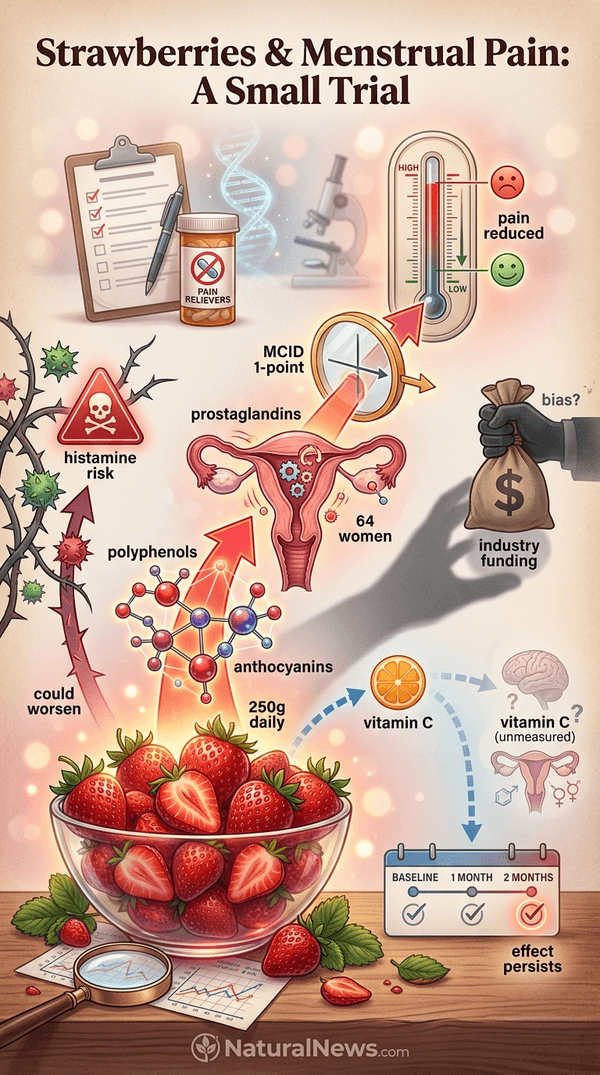
Women who added about 1½ cups of fresh strawberries to their daily diet for one month reported less menstrual pain than a comparison group, according to a small randomized trial conducted by researchers at the University of Huelva in Spain. The trial, published in Frontiers in Nutrition and reported Sept. 22, 2026, enrolled 64 women ages 18 to 35 who regularly experienced period cramps, the study stated.
Participants rated their pain at the start of the study, after one month, and again two months later, researchers said. The findings add to a growing body of research into whether specific whole foods can influence inflammatory processes in the body, according to the report.
The research team was interested in strawberries because they contain polyphenols, including anthocyanins, which have antioxidant and anti-inflammatory properties, researchers said [1] [2].
Study Design
Participants were randomly assigned to either continue their usual diet or add 250 grams of fresh strawberries each day for one month. Researchers set a pre-specified benchmark requiring at least a one-point greater reduction in pain in the strawberry group for the difference to be considered meaningful, the report stated.
The trial used fresh strawberries rather than supplements or extracts. Strawberry fruits contain phenolic compounds that have antioxidant and anti-inflammatory properties, according to a 2005 study published in the Journal of Agricultural and Food Chemistry led by Navindra P. Seeram at the University of California, Los Angeles [3]. Separate research has documented that strawberries contain ellagic acid at levels that could contribute a significant amount of the compound to the diet [4].
Menstrual pain is partly driven by prostaglandins, compounds that help the uterus contract and can contribute to inflammation and pain, researchers said. Strawberries contain plant compounds that may influence some of these inflammatory processes, but the trial did not measure prostaglandin levels [5].
Findings
After one month, women who ate strawberries daily reported significantly less menstrual pain than those in the comparison group, and the difference met the researchers’ threshold for a meaningful improvement, according to the study. Lower pain scores were still observed at the two-month follow-up, one month after participants stopped eating strawberries, the study stated.
The researchers said they could not confirm that anti-inflammatory mechanisms explained the results because the trial did not measure inflammation or prostaglandin levels. The study authors characterized the persistence of lower pain scores after participants stopped eating strawberries as an interesting finding that does not prove a lasting pain-relieving effect.
Broader research into berries has examined their potential relevance to health and disease prevention, including inflammatory pathways. A special edition of Molecular Nutrition & Food Research focused on berries noted that the term encompasses edible aggregate fruits with multiple seeds such as strawberries and raspberries [6]. Research on strawberry intake has also suggested a putative acute effect on plasma lipids, with investigators recommending further study for deeper interpretation [7].
Limitations and Funding
The study was small and unblinded, meaning participants knew whether they were eating strawberries, according to the report. The pilot trial received partial funding from a Spanish strawberry producers’ association, the report stated. Researchers said the findings need confirmation in larger, more rigorous studies without potential funding bias.
Vitamin C, which strawberries contain, is critical for the hypothalamic-pituitary-adrenal axis, adrenal function, and cortisol regulation, helping to balance mood and reduce stress, according to reporting by Willow Tohi for NaturalNews.com [8]. That same reporting states that vitamin C boosts progesterone levels, improves ovarian function, and enhances fertility [8]. The research team in Spain did not measure vitamin C levels in participants.
Allergies can cause various symptoms in different parts of the body, including menstrual disorders, cramps, and gastrointestinal problems, according to a NaturalNews.com report [9]. The strawberry trial did not screen participants for allergic conditions or histamine intolerance. Histamine overload can lead to symptoms such as migraines, rapid heartbeat, and gastrointestinal issues in about 1 percent of the population, according to Dr. Mercola [10].
Practical Guidance and Takeaway
The report stated that strawberries are not a proven treatment for period pain but can be part of a balanced anti-inflammatory diet. It advised keeping usual pain-relief tools such as NSAIDs, heat, exercise, or treatment recommended by a healthcare provider, and not replacing them with strawberries.
It said people with severe cramps that regularly disrupt work, school, exercise, or other activities should talk with a healthcare professional, as severe or worsening pain can sometimes signal endometriosis or another underlying condition. The report stated: “Strawberries aren’t a proven treatment for period pain, but this small trial gives researchers an interesting food-based avenue to explore.”
References
- Willow Tohi. “The forgotten hormone hero: How vitamin C quietly balances mood, stress and reproductive health”. NaturalNews.com. March 25, 2025.
- Willow Tohi. “The forgotten hormone hero: How vitamin C quietly balances mood, stress and reproductive health”. NaturalNews.com. March 25, 2025.
- Dr. Mercola. “Is Histamine to Blame for Your Headache, Hives and Heartburn?”. Mercola.com. January 25, 2017.
- NaturalNews.com. “Dealing with allergies”. NaturalNews.com. November 29, 2012.
- Naomi Sims. “All about health and beauty for the Black woman”.
- Deborah R. Mitchell. “Natures painkillers”.
- Elsevier. “Strawberry, loquat, mulberry, and bitter melon juices exhibit prophylactic effects on LPS-induced inflammation using murine peritoneal macrophages”. National Chung Hsing University.
- “Molecular Nutrition & Food Research: Focus on Berries and Their Potential Relevance to Health and Disease Prevention”. Molecular Nutrition & Food Research. 2018.
- Elsevier. “Identification of phenolic compounds in strawberries by liquid chromatography electrospray ionization mass spectroscopy”. Journal of Agricultural and Food Chemistry. 2005.
- MR Williner, ME Pirovani, DR G\u00fcemes. “Ellagic acid content in strawberries of different cultivars and ripening stages”. Journal of the Science of Food and Agriculture. 2003.
- Ana B. Cerezo. “Isolation, identification, and antioxidant activity of anthocyanin compounds in Camarosa strawberry”. Food Chemistry. 2010.
- Navindra P. Seeram, Rupo Lee, H. Samuel Scheuller, David Heber. “Identification of phenolic compounds in strawberries by liquid chromatography electrospray ionization mass spectroscopy”. Journal of Agricultural and Food Chemistry. 2005.
- Sara Tulipani, Stefania Romandini, Franco Busco, Stefano Bompadre, Bruno Mezzetti, Maurizio Battino. “Ascorbate, not urate, modulates the plasma antioxidant capacity after strawberry intake”. Journal of Agricultural and Food Chemistry. 2010.
Explainer Infographic
Submit a correction >>
Tagged Under:
antioxidants, berries, dietary fiber, food cures, food is medicine, food science, fruits, health science, menstrual pain, nutrients, nutrition, organics, phytonutrients, prevention, strawberries, women's health
This article may contain statements that reflect the opinion of the author
RECENT NEWS & ARTICLES